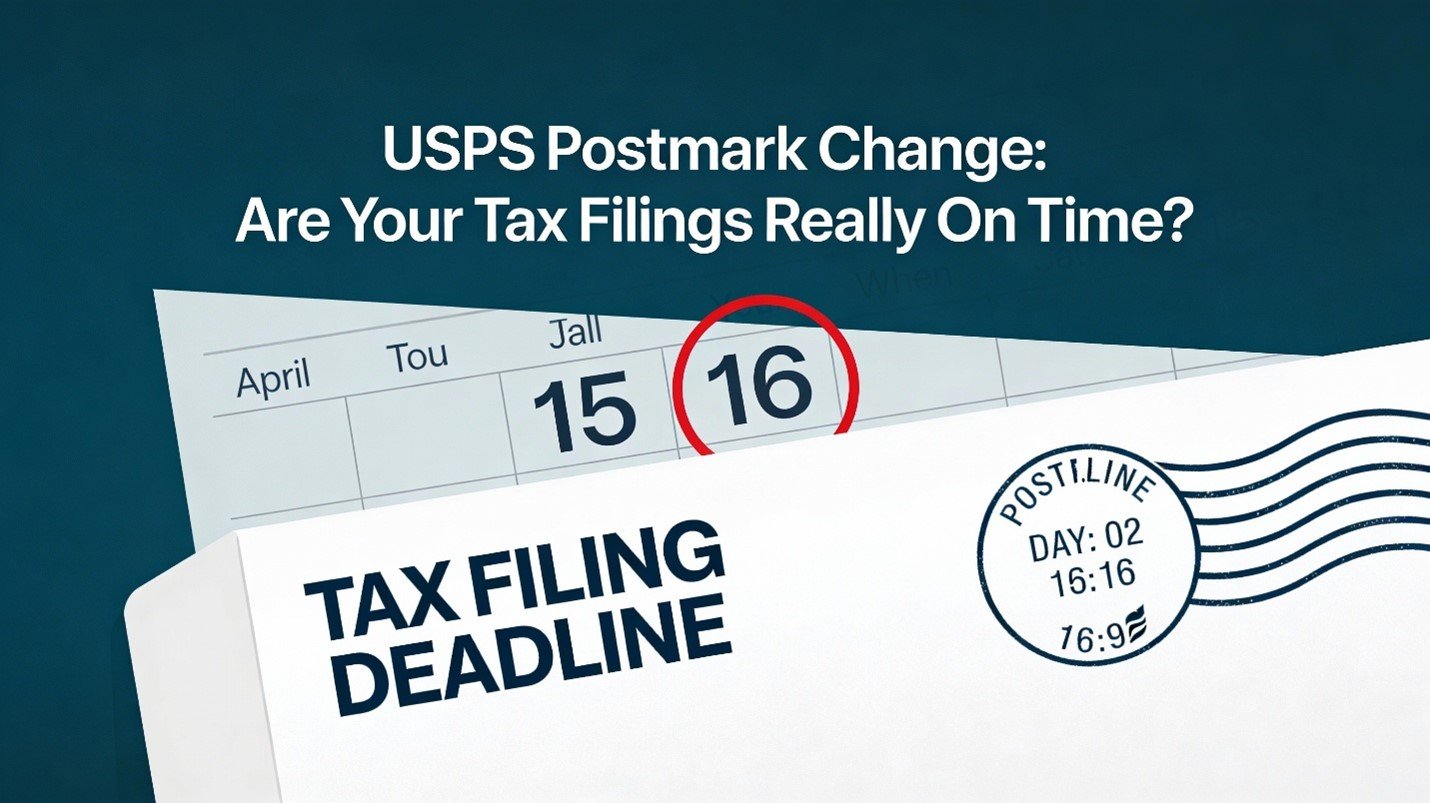
As of December 24, 2025, the United States Postal Service quietly redefined how postmarks are assigned — and the change could impact tax filings, payments, and extensions starting this tax season.
Under the new rule (FR Doc. 2025-20740), a postmark now reflects the first automated processing scan, not the moment the mail was dropped off or deposited in a mailbox. This shift effectively dismantles the long-relied-upon “mailbox rule,” which assumed an item was timely once placed in the mail with proper postage.
For taxpayers, this means:
- A return dropped into a mailbox on April 15 might not receive a postmark until April 16 or later.
- The IRS and state agencies could deem such filings late, exposing taxpayers and professionals to penalties or disputes.
Action Steps for Taxpayers and Preparers:
- File early or electronically. Use IRS e-file to eliminate postmark risk.
- Request a manual postmark or Certificate of Mailing when deadlines are near.
- Review engagement letters to clarify risks related to mailed submissions.
- Set internal deadlines 1–2 days before the actual IRS due date.
At M.A. Rubin CPA, PLLC – Stop IRS Tax Problems, we’re updating all tax resolution engagement procedures to protect clients from these new mailing uncertainties. Our team advises all taxpayers to file electronically whenever possible and use certified mail for any paper submissions.
Don’t let a postmark delay cost your client compliance — plan ahead and mail strategically this season.
Schedule an Appointment Below!
M.A. Rubin CPA, PLLC
Tel: 833-MA-Rubin (627-8246)
Email: Blog@RubinTaxRelief.com
Disclaimer: This blog post is for informational purposes only and does not constitute legal or tax advice. Consult with a qualified professional for specific advice regarding your business.
