The Reality Most Taxpayers Miss
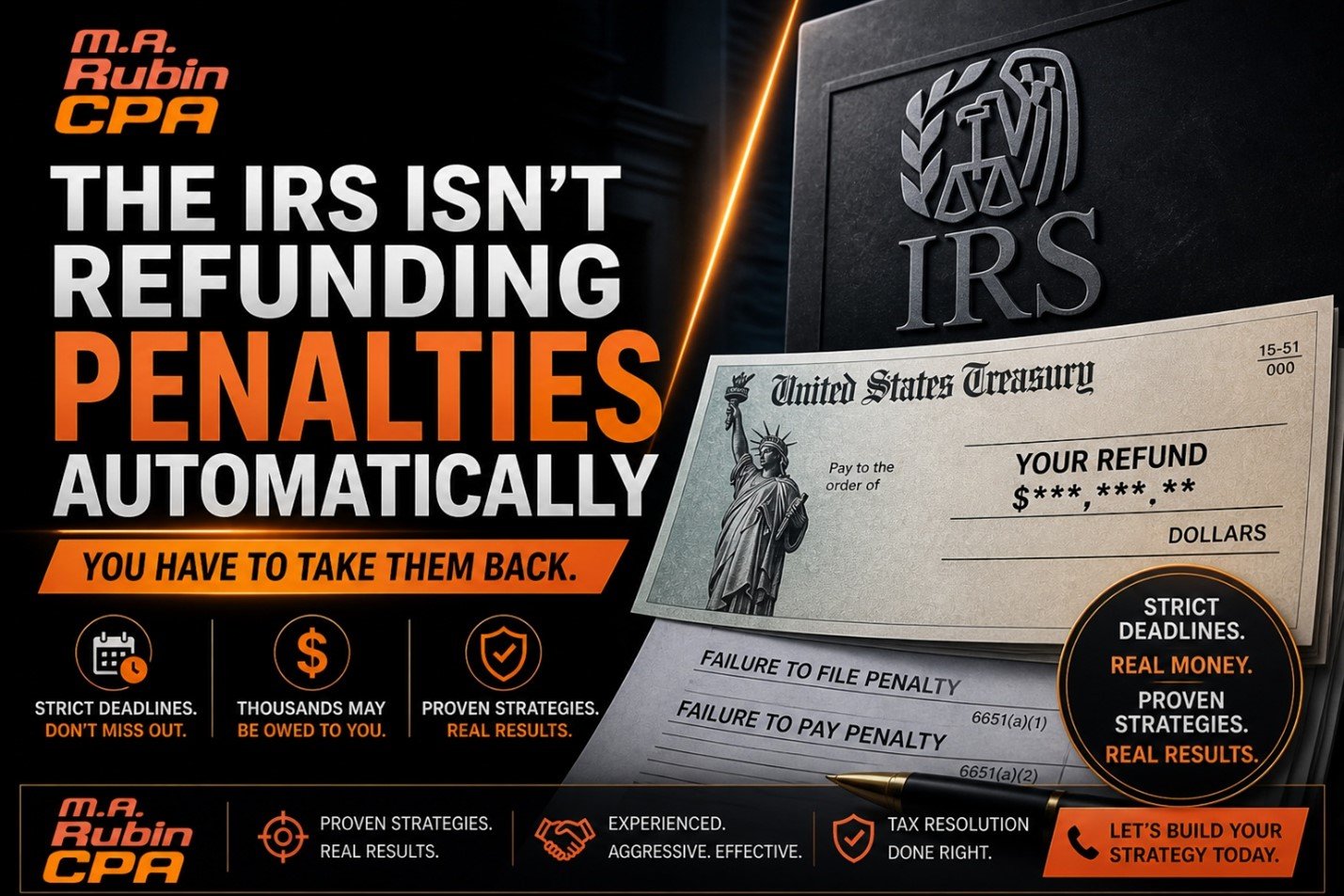
There’s money sitting with the IRS that doesn’t belong to them.
Penalties. Interest. Charges could be reduced—or refunded.
And the IRS won’t call you to offer it back.
If you don’t ask correctly, you don’t get it.
What This Is (And What It Isn’t)
This isn’t a stimulus.
This isn’t forgiveness.
This is recovery.
We’re talking about:
- Failure-to-file penalties
- Failure-to-pay penalties
- Interest tied to those penalties
In many cases, these can be reduced or refunded using:
- First-Time Abatement
- Reasonable Cause
- Administrative relief rules most taxpayers never see
Who Should Be Paying Attention Right Now
If any of these apply, you’re in the conversation:
- You filed late in 2020–2022
- You paid penalties without reviewing them
- You had business disruption during COVID
- You have multiple years of IRS issues
Most people in this group assume the damage is done.
It’s not.
The Deadline Problem
There is a hard cutoff.
Miss it, and your right to claim the refund disappears.
No negotiation. No appeal. No “but I didn’t know.”
This is one of those areas where timing matters more than anything else.
Why Most Requests Fail
Not because the taxpayer doesn’t qualify.
Because:
- The request is vague
- The argument is weak
- The timing is off
The IRS doesn’t reward effort.
It responds to structure.
How We Approach It
At M.A. Rubin CPA, PLLC, this isn’t handled as a form submission.
It’s handled as a case.
- We pull transcripts and identify every penalty
- We determine what qualifies and what doesn’t
- We position the argument based on IRS standards—not guesswork
- We align it with any broader resolution strategy
That’s the difference between hoping and getting results.
Bottom Line
If you paid penalties, there is a real possibility you overpaid.
But the IRS will keep that money unless you take action.
FAQ
What is IRS penalty abatement?
A process to remove or reduce penalties based on eligibility criteria like first-time compliance or reasonable cause.
Is penalty relief automatic?
No. In most cases, it must be requested and supported.
Can I get a refund if I already paid penalties?
Yes—if the request is made within the legal time window.
What is the deadline to claim a penalty refund?
It depends on the tax year, but 2026 is a critical cutoff for many taxpayers.
How long does the IRS take to process requests?
Typically, several months, depending on complexity.
Schedule an Appointment Below!
M.A. Rubin CPA, PLLC
Tel: 833-MA-Rubin (627-8246)
Email: Blog@RubinTaxRelief.com
Disclaimer: This blog post is for informational purposes only and does not constitute legal or tax advice. Consult with a qualified professional for specific advice regarding your business.
