
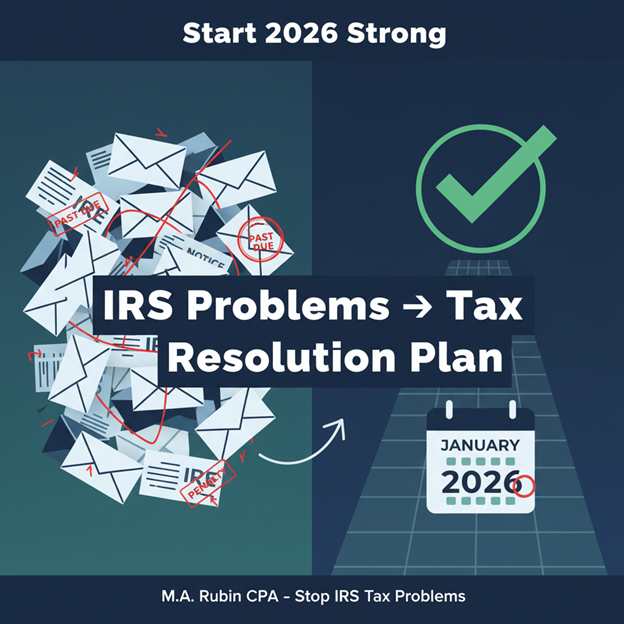
As 2026 begins, many taxpayers and business owners are opening a pile of IRS envelopes that never truly went away last year. Unfiled returns, unpaid balances, and ignored notices tend to grow into larger problems as penalties and interest accumulate. Starting the year with a clear tax resolution plan can transform that anxiety into a structured path toward compliance and control.
For example, a self‑employed consultant who skipped filing for three years may discover that a modest original liability has doubled once penalties and interest are added, creating fear of bank levies or wage garnishments. Early action in January can mean the difference between a manageable payment strategy and a year dominated by mounting IRS pressure and escalating balances.
Common IRS Problems Seen In January
By January, patterns of non-compliance and tax stress are easier to see. Certain types of IRS problems appear again and again, and each can fit into a systematic resolution approach.
- Unfiled individual or business returns for prior years that block refunds, increase audit risk, and prevent the IRS from closing older tax periods.
- Growing balances from penalties and interest on unpaid income, self-employment, or payroll tax that make the original tax due look small by comparison.
- A stack of IRS notices (CP, LT, or collection letters) that were put aside in the hope that time alone would make the problem disappear.
In practice, these problems often overlap. A small business owner might owe payroll tax, be behind on personal filings, and have multiple notice types arriving at the same time, requiring a coordinated rather than piecemeal response.
Why January Is The Best Time To Act
January offers a unique strategic window: year-end income and expense data are becoming available, but the 2025 return has not yet been filed. That timing creates room to design a coordinated tax resolution plan instead of reacting in crisis mode later.
When past-due returns, current-year filing, and payment options are planned together, taxpayers gain a more accurate picture of total exposure and cash-flow impact. Proactive January planning often leads to better outcomes with installment agreements, penalty relief requests, and other collection alternatives because the IRS sees a clear move toward full compliance rather than continued delay.
Core Tax Resolution Tools For 2026
A strong tax resolution plan uses proven tools, applied in the right order, to fit the taxpayer’s income, assets, and ability to pay. While every case is different, several core options appear in most successful strategies.
- Installment agreements: Formal payment plans that allow taxpayers to pay over time; the IRS describes multiple types of agreements for individuals and businesses, including streamlined options in some cases.
- Penalty abatement: Requests based on reasonable cause or first-time abatement can remove or reduce penalties when a good compliance history or documented hardship supports relief.
- Currently Not Collectible (CNC) status: For taxpayers in genuine financial hardship, CNC status can pause active collection while still requiring timely filing of all current and future returns.
In more complex matters, options such as offers in compromise, business restructuring, or changes in entity choice may also support a sustainable long-term outcome, especially when coordinated with broader tax planning.
Real-World Example: From Chaos To Plan
Consider an S‑corporation owner who:
- Has two unfiled personal returns and one unfiled corporate return.
- Owes prior‑year balances with growing penalties.
- Has received multiple CP and LT notices but has not responded.
A resolution‑focused engagement might begin with an IRS transcript analysis, followed by a filing sequence (oldest returns first), and then submission of a streamlined installment agreement request once all returns are current. Where facts support it, a penalty abatement request and documentation of reasonable cause could significantly reduce the total amount due.
How A Tax Resolution–Focused Firm Helps
Trying to navigate IRS procedures alone can lead to missed deadlines, inconsistent communication, and lost opportunities for relief. A CPA firm focused on tax resolution brings structure, documentation, and experience to each step of the process.
That often includes:
- Diagnostic review and transcript analysis to see exactly what the IRS sees: balances by year, filing status, and key dates.
- A written resolution roadmap that sequences catch-up filings, payment strategies, and potential penalty relief in a logical order.
- Professional representation before the IRS so taxpayers are not navigating complex rules, phone calls, and correspondence on their own.
For a firm like M.A. Rubin CPA, PLLC – Stop IRS Tax Problems, the goal is simple: transform IRS notices, unfiled returns, and tax debt into a clear, defendable resolution plan that supports long-term compliance and peace of mind.
Act Now
Starting 2026 with unresolved IRS problems does not have to define the rest of the year. Turning those issues into a formal tax resolution engagement now can protect assets, stabilize cash flow, and reduce the risk of disruptive enforcement later.
If there are unfiled returns, growing balances, or a stack of IRS notices, January is the moment to move from worry to action and build a resolution plan with professional guidance and a documented strategy.
Schedule an Appointment Below!
M.A. Rubin CPA, PLLC
Tel: 833-MA-Rubin (627-8246)
Email: Blog@RubinTaxRelief.com
Disclaimer: This blog post is for informational purposes only and does not constitute legal or tax advice. Consult with a qualified professional for specific advice regarding your business.
